
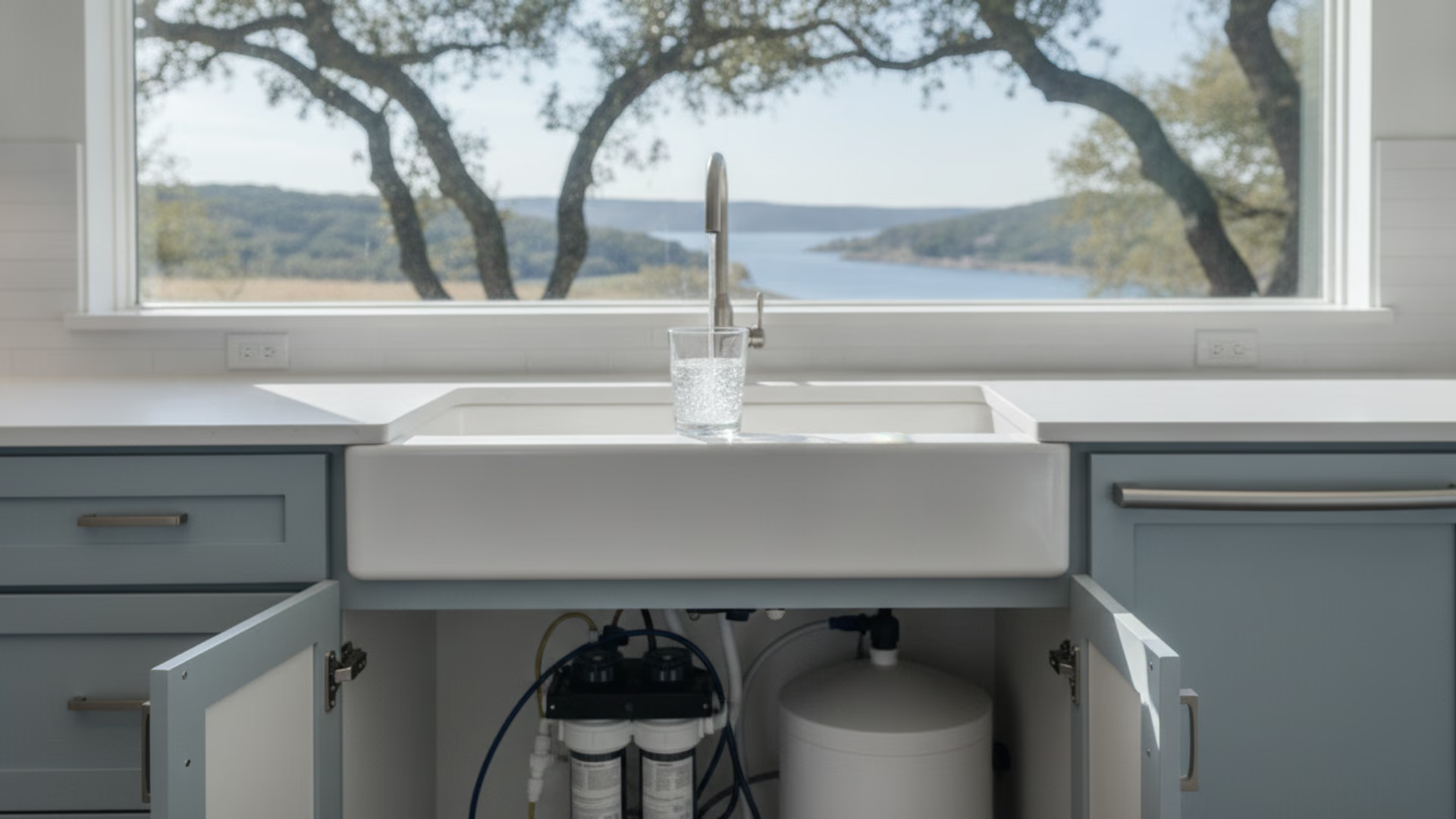
A reverse osmosis system gives homes in Austin and the Lake Travis area clean, great-tasting drinking water straight from the kitchen tap. A compact under sink water filter with an RO membrane at its heart feeds its own drinking-water faucet beside the main one, and it makes the kitchen tap the best water in the house: clear ice from the freezer, and coffee that tastes the way it does at the shop. "We only drink bottled water" is how many of our reverse osmosis conversations start, and it is an easy habit to retire once the tap tastes right. Here is how the system works, what it takes out, what it leaves in, and why the water around here needs a specific build.
How a reverse osmosis system works
RO is a pressure-driven process, not a cartridge you swap. A typical under-sink system runs water through five stages in a row:
- Sediment prefilter. A 5-micron cartridge catches grit, rust flakes and the sediment stirred up after main breaks and flushing, so none of it reaches the membrane.
- Carbon block. Removes chlorine and, when it is the right carbon, chloramine. This stage protects the membrane as much as it fixes taste, because thin-film composite membranes are damaged by oxidizers.
- RO membrane. Line pressure pushes water through a semi-permeable membrane that passes water molecules and rejects most dissolved solids. What does not pass goes to a drain line as reject water.
- Storage tank. A membrane makes water slowly, so a pressurized tank of two to four gallons holds what you drink and cook with.
- Post-carbon and faucet. A final polishing carbon removes any taste picked up in the tank, and the water arrives at a dedicated drinking-water faucet on the sink deck.
The drain connection ties into the sink drain through an air gap so nothing can siphon back. Tankless RO units skip the storage tank and make water on demand with a small pump, a good fit for a wet bar cabinet or a busy office break room where a tank would run dry.
What RO removes (and what it doesn't)
A healthy membrane rejects 90 to 99 percent of total dissolved solids. In practice that means the calcium and magnesium that freeze out as cloudy ice, sodium, lead and copper picked up from older plumbing, arsenic, nitrates, fluoride, radium and, with the carbon stages ahead of it, PFAS and the trihalomethane byproducts of disinfection. When the ice is cloudy, that is dissolved minerals coming out of solution as it freezes; RO water freezes clear. When coffee and tea taste flat or faintly chemical, that is usually chloramine, and the carbon block handles it before the water ever reaches the membrane.
Worth knowing
What RO is not is a whole-home fix. It treats the few gallons a day that come out of one faucet, not the shower, the laundry or the water heater. Scale on fixtures and appliances is a water softener job, and pool smell in the shower is a whole-house carbon filter job. RO is the last stage at the tap, not a substitute for either.
Is RO water good for you? The mineral question
RO strips minerals along with everything else, which is why some people find it flat. Two honest answers. First, the calcium and magnesium in tap water are a small fraction of what you get from food. Second, if you prefer the taste of mineral water, a remineralization stage after the membrane adds a controlled dose of calcium and magnesium back and lifts the pH. We build systems both ways. The longer version, including what the research does and does not say, is in our post on whether reverse osmosis water is good for you.
Where it goes: under the sink, the fridge line, the wet bar
The standard install lives in the kitchen sink cabinet, with the faucet drilled through the sink deck or countertop. From there a quarter-inch line can run to the refrigerator so the ice maker and door dispenser draw RO water too, which is the actual fix for cloudy ice and for the built-in fridge filter that never seems to keep up. Wet bars, coffee stations and second kitchens get their own compact unit. For light-commercial work, offices, restaurants and small facilities, a tankless or higher-output unit feeding an ice machine and a coffee brewer is a common scope.
RO on Hill Country water: chloramine and hardness
Two things about the water here decide how an RO system should be built.
Chloramine. Austin Water, Cedar Park, Lakeway MUD, Travis County WCID 17 and Horseshoe Bay all disinfect with chloramine, chlorine bonded to ammonia, at residuals averaging roughly 2 to 3 ppm. Chloramine does not off-gas the way chlorine does, a standard carbon block lets a good share of it through, and what gets through wears on the membrane over time. On chloraminated supplies we put a catalytic carbon block ahead of the membrane. Bee Cave's utility reports chlorine rather than chloramine, and Horseshoe Bay switches to free chlorine for a month each fall (Sept 28 to Oct 27 in 2026), so the prefilter is chosen to handle both.
Hardness. Cedar Park, Lakeway and Horseshoe Bay deliver unsoftened Lake Travis or Lake LBJ water at 167 to 195 mg/L, roughly 10 to 11 grains, with TDS in the 250 to 320 range. Scale is what fouls a membrane fastest, and an RO fed by a softener typically gets years more membrane life than one fed hard water straight from the main. Austin Water is lime-softened to about 5.4 grains but leaves the plant at pH 9.7, with disinfection byproducts averaging 40.5 ppb; Cedar Park single samples reached 97.8 ppb in 2024 and Lakeway MUD logged 106 ppb in 2025, within the running-average limit, and some households simply prefer to polish that out at the tap. Taste plays a part too: in February 2019, 2,451 Austin residents called 311 about fishy-tasting tap water after a zebra-mussel die-off in a raw-water main, a reminder that tap taste can shift, and one more reason people like RO at the kitchen tap. And on the few Hickory-sandstone wells around Horseshoe Bay, naturally occurring radium is exactly what a membrane is designed to remove.
We test your water first so the prefilter stack matches the supply.
Maintenance
An RO system asks for a filter change, not a service contract. Sediment and carbon prefilters go six to twelve months depending on how much they catch. The RO membrane lasts two to five years; hard, chloraminated feed water is the short end, softened water the long end. The tells that a membrane is done: the tank fills slowly, a TDS meter at the faucet reads more than 10 to 15 percent of the tap number, or the old tap taste comes back. The storage tank's air charge gets checked at the same time. We set you up with filter sizes and a schedule at install.
Service area
We are based in Spicewood and install reverse osmosis systems across Austin, Cedar Park, Lakeway, Bee Cave and Horseshoe Bay, along with the rest of the Lake Travis and Highland Lakes communities. Every job is done by Bret himself, and the company has installed over 1,000 systems since 2003.
If you would like to trade the bottled water for a drinking-water faucet of your own, call (512) 587-8188 during business hours, Monday through Friday 8am to 5pm, or request a free estimate. We test first, quote in writing, and schedule the install during business hours, Monday through Friday.