
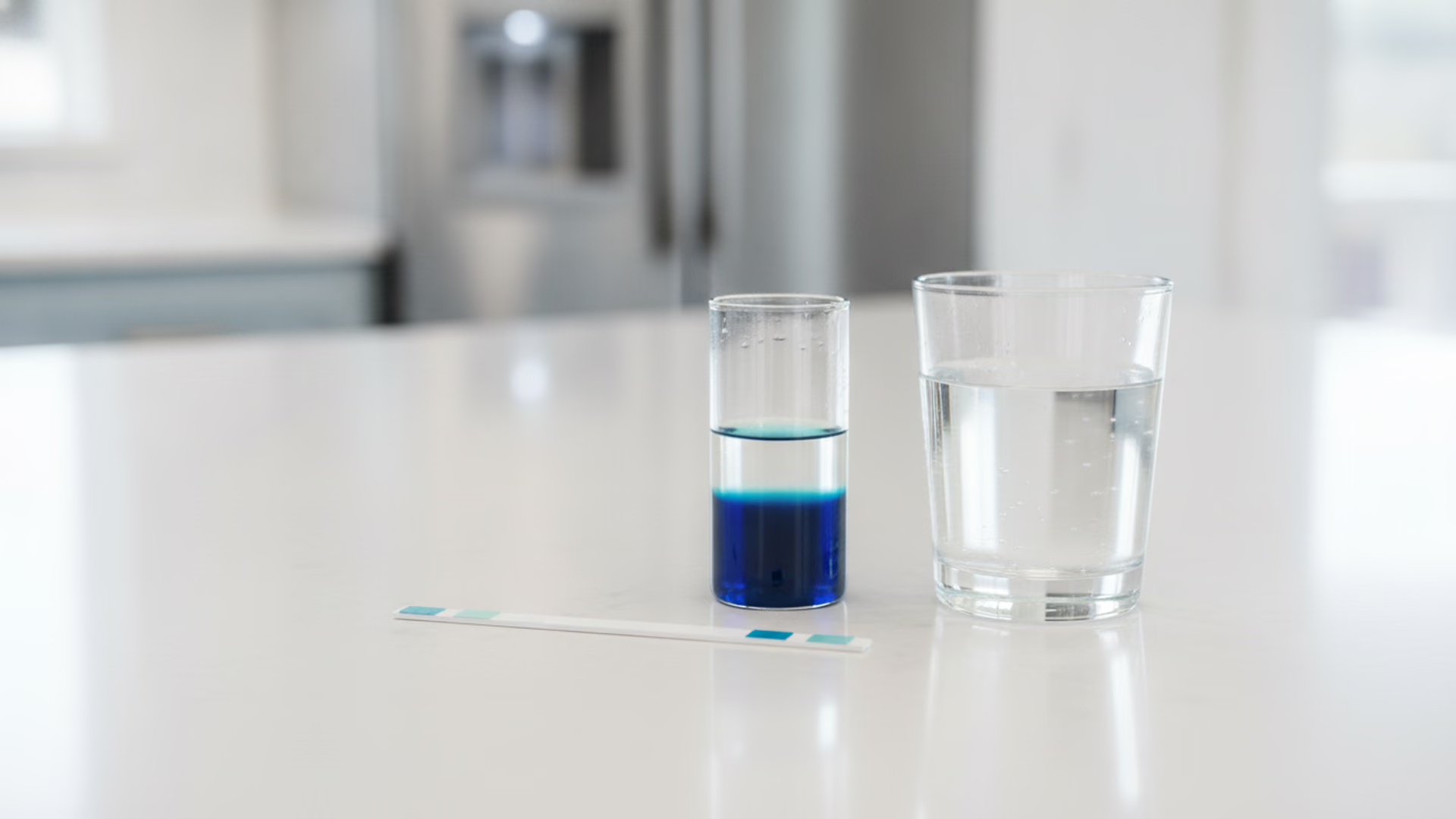
Water testing tells you exactly what is in your water, and it comes before every system Absolute Water Solutions recommends in Austin, Spicewood and the Hill Country. Most homes we visit have water that runs clear, does not smell, and causes nothing worse than spots on the glasses: a lot of it is perfectly good water. The details that shape a treatment decision in Central Texas (hardness gradually plating the inside of a water heater, coliform bacteria in a well, nitrate, radium in the Trinity aquifer, chloramine in city supply) have no color, taste or smell at the levels where they start to matter. So rather than guess, we measure, and you get real numbers to decide with.
We have been treating water out here since 2003, and the reason we test first is simple: the wrong number buys the wrong equipment. A softener sized for Austin Water's 5.4 grains per gallon is undersized for a Steiner Ranch home at 10.7, and no carbon filter ever built will catch a bacteria problem it was not designed to see.
What an in-home water test checks
The first round happens at your kitchen sink, with you watching. Five readings tell us most of what a system needs to be:
- Hardness. A titration kit (drops added to a vial until the sample turns from red to blue) gives hardness in grains per gallon. This is the number that sizes a softener.
- TDS. A TDS meter reads total dissolved solids in parts per million: roughly everything the water picked up on the way to your tap. High TDS is why ice comes out cloudy, why a glass tastes faintly salty, and why some Trinity wells south of Dripping Springs need reverse osmosis rather than a softener alone.
- pH. Below about 6.5, water is acidic enough to eat copper and leave blue-green stains around drains. Austin Water runs the other way, near 9.7 after lime softening, which is part of why it still plates fixtures at a "moderately hard" reading.
- Chlorine or chloramine residual. Austin, Cedar Park, Leander, Liberty Hill and the Dripping Springs WSC all disinfect with chloramine, not plain chlorine, and a pool-store chlorine strip under-reads it. We test total chlorine, which decides whether standard carbon will do or the job needs catalytic carbon.
- Iron. Above 0.3 mg/L, iron starts leaving orange stains in the toilet and tub and turning laundry yellow. A field kit puts a number on it.
We also look. Aerators, the inside of the toilet tank, the water heater and, on a well, the pressure tank and wellhead all tell a story the readings should confirm.
What needs a lab: well water testing
A private well in Texas is the owner's to look after, and TCEQ recommends a bacteria and nitrate test every year as routine maintenance, a habit many well owners have not started yet. The contaminants with federal health limits are not the ones a field kit sees: they sit at parts-per-billion or picocurie levels, or they have to be cultured overnight in an incubator. Those go to an accredited drinking-water lab:
- Total coliform and E. coli: the standard indicator that surface runoff, septic effluent or animal waste is reaching the well.
- Nitrate: from livestock and septic drainfields. The federal limit is 10 mg/L as nitrogen (45 mg/L as nitrate), and roughly one in five USGS well samples in Blanco County has been over it.
- Radium and gross alpha occur naturally in the Trinity and Hickory sandstones. Liberty Hill's own city wells tested combined radium at 3.8 picocuries per liter, 76 percent of the federal limit of 5, under the limit, and with no taste or smell, so only a test shows it.
- Arsenic, lead, fluoride, sulfate and PFAS: each with its own method and its own limit.
We supply the sterile bottles, pull the sample from a sanitized tap or the wellhead, keep it chilled and get it to the lab inside its hold window (bacteria samples have to arrive within roughly a day of collection for the result to be valid). Then it is the lab's turnaround, typically several days, before you have a report we can sit down and read together.
How to test water hardness (and what the number means)
If you want to know how to test water hardness yourself before calling anyone, a strip from the hardware store gets you a ballpark. Two things trip people up when they read the result.
First, units. Labs and utility reports give hardness in milligrams per liter as calcium carbonate; softeners are sized in grains per gallon. Divide mg/L by 17.1 to get gpg. Austin Water's 93 mg/L average is 5.4 gpg. Travis County WCID 17's 185 mg/L at Steiner Ranch is 10.7 gpg. Leander's 194 is 11.3. The USGS scale calls anything over 180 mg/L (about 10.5 gpg) very hard, and 467 of 480 well samples in Blanco County landed there.
Second, the strip is coarse. It reads in bands, and a band that spans 7 to 14 gpg is useless for sizing a softener, which is why we titrate. Sizing off a guess either leaves hardness bleeding through before regeneration or buys a unit that burns salt regenerating capacity you never used. The water softener page walks through the grain math; the point here is that the number has to be real before any of that math starts.
When to test
- Annually on any private well, for bacteria and nitrate at minimum, per TCEQ.
- After a flood or heavy runoff. The July 2025 floods and every Hill Country flash flood push surface water into karst limestone wells. Test once the water settles.
- After a boil-water notice on utility water. Austin had citywide notices in 2018, 2021 and 2022; West Travis County PUA customers saw them in late 2025 and again in 2026; Liberty Hill in February 2023. The flushing afterward stirs sediment into home plumbing.
- Buying or selling a home on a well. A lab report gives buyer and seller the clearest picture.
- A new baby, a pregnancy, or someone immune-compromised in the house.
- Any change in taste, color or smell: a rotten-egg smell that is worse on the hot side, water that goes cloudy or sandy after the pump cycles, slime in the toilet tank, orange rings that were not there last year.
- After well work, including having the pump lowered, which many Hays and Blanco County owners have done during the current drought.
- Before you buy any treatment equipment. Always.
PFAS, lead, radium: the contaminants in the news
If you have heard about PFAS in the news and are asking, is my water safe, here is the honest local picture. Austin Water's 2023-2024 federal monitoring found little to no PFAS. Several of the compounds were not detected at all and the rest came in under the new limits, which are measured in single-digit parts per trillion. West Travis County PUA did report a PFAS breakdown product in its 2025 water quality report. Those numbers are mostly low, and for households who want extra assurance the reasonable move is a reverse osmosis system at the kitchen tap, which is a proven barrier to PFAS, lead, arsenic, nitrate and fluoride whether or not any of them turn up this year.
Lead is a plumbing question, not a source-water one. Austin Water reports no lead service lines, but copper soldered before 1986 can still leach, so a lead test is a first-draw sample from a tap that has sat overnight. Radium is a well question: it comes out of the rock, it shows up in the Trinity's Hensell sand under Liberty Hill, and cation-exchange softening and reverse osmosis are both EPA-listed ways to remove it.
What we do with the results
Worth knowing
A report is only useful if it turns into a decision, so we go through yours line by line, flagging which numbers are health limits (MCLs) and which are secondary standards that affect taste, staining and equipment rather than safety. Then the fix follows the number:
- Hardness over about 7 gpg, or any hardness with a tankless heater: a properly sized water softener.
- Coliform or E. coli: disinfection, usually a UV system (our water purification page covers how UV works and what it does not do).
- TDS, nitrate, fluoride, radium or PFAS at the drinking tap: reverse osmosis.
- A well that needs several of the above plus sediment control: a staged system, covered on the well water treatment page.
Sometimes the result is that you do not need anything, or only a cartridge you can change yourself. We will say so. When you do need a system, the estimate is free, the equipment is sized to your numbers, and the install is done by Bret.
Testing across the Hill Country
The water changes by the mile out here, which is why we test on site instead of quoting regional averages. In Austin, the split is between lime-softened, chloraminated Austin Water and the unsoftened Lake Travis districts like Steiner Ranch and Barton Creek at twice the hardness. Around Dripping Springs, Hays Trinity wells sit at 20-year lows under a 40 percent pumping curtailment, and deeper drawdown brings higher TDS and more sediment. Johnson City and Round Mountain draw from Blanco County's Ellenburger and Trinity wells, inherently very hard, with iron over the staining threshold in nearly half of USGS samples. Liberty Hill is the one with no groundwater district at all and documented radium in the Hensell formation. And in Spicewood, our home base on the south shore of Lake Travis, utility water, private wells and raw lake intakes all sit within a few miles of each other.
If you are curious what your water is doing, the test is the easy place to start. Call (512) 587-8188 or request a free estimate and we will schedule a visit during business hours, Monday through Friday, 8am to 5pm.