
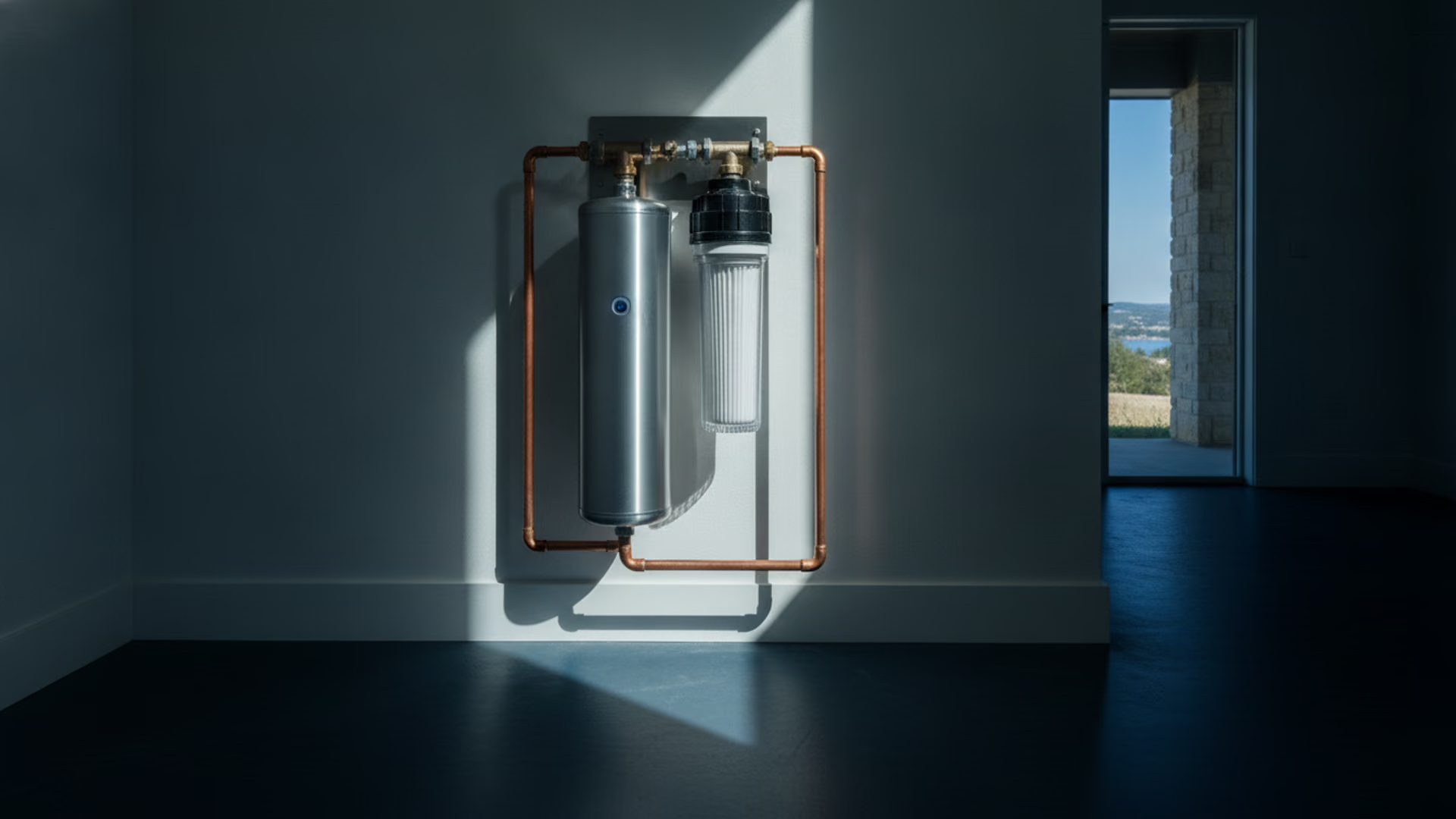
A water purification system disinfects the water coming into your home: it deals with the bacteria, viruses, and cysts that no filter cartridge, softener, or pitcher is designed to touch. Filtration handles what you can see and taste; purification is the step that makes water microbiologically safe to drink. It is a good fit for homes on private wells, homes that pump from the lake, and city-water households that want a barrier of their own after a boil-water notice. If a well test came back positive for coliform, UV disinfection is usually the fix, and the steps in the meantime are simple. And if you have just been wondering "is my water safe?", a water test answers that clearly, one way or the other. Absolute Water Solutions has designed and installed purification systems for Lake Travis and Hill Country homes since 2003, every one starting with a water test and ending with a system sized to what that test found, never a package pulled off a shelf.
What purification actually means (and what it doesn't)
Three words get used interchangeably in this trade, and they do three different jobs. Softening removes hardness: the calcium and magnesium that leave white crust on faucets. Filtration removes particles and chemistry: sediment, chlorine and chloramine, iron, bad taste. Purification makes water microbiologically safe. It kills or removes the living things (E. coli, total coliform, Giardia, Cryptosporidium, viruses) that a filter is not built to stop and that do not show up as a smell or a stain, which is why a test, not a glance, tells you whether they are there.
The distinction is worth knowing because product labels often blur it. A countertop pitcher labeled "purifier" is a carbon filter; it improves taste and does nothing to a bacterium. A whole-house carbon tank is excellent on chloramine and useless against coliform. If your question is whether the water is safe to drink, this is the page that covers it. If it is scale, spots, or a pool smell, our water softener and water filtration pages cover those, and most well systems we build combine both with the disinfection step described below.
UV water purification: how it works and what it needs
Ultraviolet disinfection is the workhorse of residential purification and the system we install most on private wells. Water passes through a stainless chamber around a UV lamp sealed inside a quartz sleeve. The lamp emits UV-C light at 254 nanometers, which scrambles the DNA of any microorganism passing through so it cannot reproduce. Bacteria, viruses, and chlorine-resistant cysts like Cryptosporidium are all neutralized in the fraction of a second the water spends in the chamber. Nothing is added to the water. There is no chemical to feed, no taste change, no wastewater: the lamp simply stays lit and every gallon entering the house passes through it. We install Viqua UV systems, sized by the home's peak flow rate in gallons per minute so a shower, a washing machine, and a running hose together never outrun the dose.
UV has conditions, and meeting them is most of what makes a system work well. UV-C only works on water it can shine through. Turbidity above roughly 5 NTU (the cloudiness that shows up in Hill Country wells after a flash flood) lets particles shadow organisms from the light, so every UV system we install sits behind a 5-micron sediment prefilter. Hardness above about 7 grains per gallon films the quartz sleeve with scale within months, and iron above 0.3 mg/L stains it; both block the dose. On the Trinity and Ellenburger wells west of Austin that usually means a softener or iron filter ahead of the UV, which is exactly why the test comes first. The lamp loses output long before it burns out, so it is replaced yearly on a schedule, and the sleeve is pulled, inspected, and cleaned at the same visit. Done right, a UV system is silent, draws about as much power as a light bulb, and disinfects the water for every tap in the house.
Chlorination and other treatment for tougher wells
Some wells throw problems UV cannot handle alone. The most common tell is slime in the toilet tank: a reddish-brown or rusty gel clinging to the tank walls and the flapper, sometimes with an oily sheen on top. That is iron bacteria, an organism that feeds on dissolved iron and builds biofilm through the pressure tank, the pipes, and the water heater. UV kills what passes through the chamber but leaves no residual, so a colony already living downstream simply keeps growing. The fix is chlorination: a chemical feed pump injects a measured dose of chlorine at the well line, a retention tank gives it the contact time it needs (typically around twenty minutes at household flow), and a carbon filter strips the chlorine back out before the water reaches a fixture, so the house never tastes it. The same setup handles wells with heavy bacterial loads, hydrogen sulfide, or high iron, because chlorine oxidizes iron and sulfur into particles a filter can catch.
Whether a well needs UV, chlorination, or both is a call the test makes for you. Total coliform with no E. coli and clear water is a UV job with a prefilter. Coliform plus iron staining plus that toilet-tank slime is chlorination, retention, and carbon, often with UV as a final barrier. Either way, the well itself is part of the treatment: we look at the well cap, the casing seal, and the grade around the wellhead, because a positive test on a Hill Country well is very often surface water getting in after a storm rather than a contaminated aquifer. Our well water treatment page covers the rest of the well system (sediment, hardness, low yield), and for homes that pump raw lake water instead of groundwater, surface water treatment is its own discipline with disinfection built in.
Purification for city water: after a boil notice, chloramine, and byproducts
If you are on Austin Water, a Lake Travis MUD, or a Williamson County utility, your water is disinfected before it reaches you, and it is worth saying plainly: municipal water in this region meets the federal rules almost all of the time. The honest case for a purification step at home is the rest of the time, and the things the rules allow.
Austin issued three citywide boil-water notices in four years: October 2018, when the Llano River flood pushed raw-water turbidity past 400 NTU; February 2021 during Winter Storm Uri; and February 2022 after an operator error at the Ullrich plant. Leander's 2025 water-quality report logged a total-coliform treatment trigger in July 2025. Each of those events ended with system flushing that stirs sediment into home plumbing, and each left a lot of people asking what a barrier at their own house would look like. A sediment prefilter and UV at the point of entry is that barrier, and it runs whether or not a notice has gone out.
The other issue is what treatment leaves behind. Cedar Park and Leander disinfect with chloramine, and single Cedar Park samples in 2024 measured total trihalomethanes (disinfection byproducts) at 97.8 parts per billion against a federal limit of 80, though the running annual average stayed under the limit. Chloramine and byproducts are not a UV problem; they are a carbon and reverse osmosis problem. A reverse osmosis drinking water system at the kitchen tap is the right tool for dissolved contaminants of every kind, including the ones only a lab test turns up: Liberty Hill's city wells, for example, run at roughly three-quarters of the federal limit for radium. Water that meets the rules is legally compliant; a second line of defense at the tap is simply an extra layer for households that want one.
How we design a purification system
Every job runs the same way, and it starts with a water test. On a well that means a bacteria sample sent to a lab along with field tests for hardness, iron, pH, and turbidity: the numbers that decide whether a UV lamp can even do its job. On city water it means reading your utility's report against what the tap actually shows. From the results Bret sizes the system to the household: the number of bathrooms and fixtures sets the peak flow in gallons per minute, which sets the UV chamber rating and the prefilter capacity, and the test chemistry determines what has to go ahead of the lamp. Installation is done by Bret (100% of jobs, no subcontractors) to plumbing code, with a bypass so the system can be serviced without shutting off the house. After the install, a follow-up bacteria test confirms the water is clean, and we set the lamp and sleeve schedule so it stays that way.
Worth knowing
Absolute Water Solutions holds Texas Commission on Environmental Quality water treatment license WT001370 and is insured. Texas requires that license for water treatment work; ask any installer for their number. In 23 years and over 1,000 projects, one pattern has held: the systems that work best, and keep working, are the ones built on a test.
Purification across Lake Travis and the Hill Country
We are based in Spicewood, where many of our neighbors are on private Trinity wells or pump from the lake, so looking after the water is part of owning the home: the state recommends a bacteria and nitrate test every year, and after any flood, as routine upkeep. Down the south shore, Briarcliff and Highland Lake Estates are the same story: well and lake-intake homes where UV behind a sediment prefilter is the standard build. Lakeway sits mostly on MUD water, where the questions are chloramine, byproducts, and a backstop for the next notice. Up the Highland Lakes, Marble Falls mixes city water with Llano Uplift wells that run hard and often carry iron a UV sleeve has to be protected from. And in Austin, purification is an optional second barrier behind a utility that has issued three citywide notices since 2018. Wherever you searched "water purification near me" from, if it is in the Hill Country west of Austin, we have most likely worked on a well or a lake house near you.
Visits are scheduled Monday through Friday, 8am to 5pm. If your test came back positive, the interim step is easy: boil drinking water for one minute or use bottled until we have been out, then call (512) 587-8188 or request a free estimate. We will put you on the earliest business-day visit we have and bring the test kit.