
Two houses on the same road outside Spicewood can be on two different waters: one on a Lake Travis surface plant that chlorinates, the other on a Trinity well that pulls sand and a trace of iron. Neither may need a full treatment train. What one of them needs is a single, well-chosen filter stage: a sediment cartridge ahead of the softener, or a carbon cartridge that takes the disinfectant edge off the kitchen line. That is the corner of the WaterCare line this page covers: the ONE™ cartridge filter, in-line cartridge filters, and the accessories that let us tailor a system to a house instead of treating every house the same. As with everything we install, the choice begins at the water test rather than the catalog.
The ONE™ cartridge filter
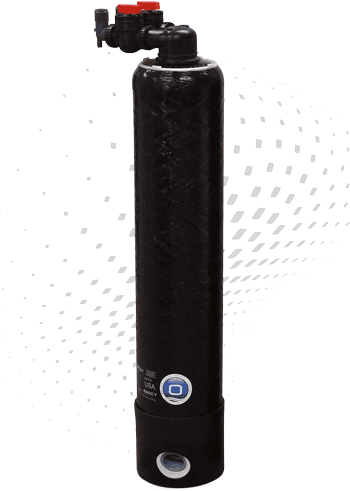
The ONE™ filter is a single large-capacity cartridge housing designed for two things compact housings struggle with: higher flow rates and higher contaminant retention. Because it holds more media and passes more water, it can take the place of several smaller filters in series, and that is where the day-to-day benefit shows up. The time between cartridge replacements stretches out, and there is one housing to service instead of three.
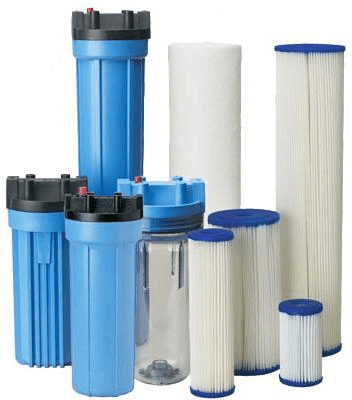
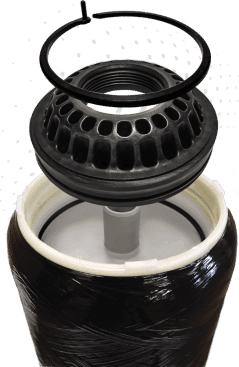
It is built for a variety of applications, with different cartridge types available for the same housing. That matters because the cartridge is where the work happens. A sediment cartridge strains sand, silt and rust; a carbon cartridge adsorbs chlorine, taste and odor. The housing stays put and the cartridge changes with the water. Replacement is simple (the spent cartridge comes out and a new one goes in), and an optional bottom drain on the housing prolongs the system's overall lifespan.
In-line cartridge filters and accessories
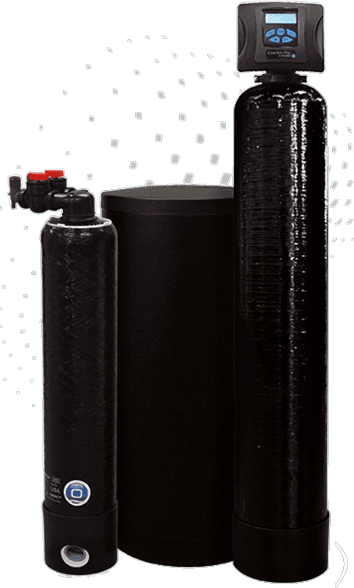
Not every job wants a housing that size. The broader WaterCare line includes in-line cartridge filters and accessories that can be matched to a specific home and a specific water issue. They work two ways. Ahead of a larger system, an in-line sediment filter protects the equipment behind it: a softener's control valve, a UV lamp's quartz sleeve, or a reverse osmosis membrane all last longer when grit is caught first. On their own, an in-line filter is sometimes the whole answer: a house on softened district water that only wants the chlorine taste out of one line, or a well with clean chemistry that throws a little sand when the pump cycles.
Where cartridge filters fit around Hill Country water
Cartridge filtration is mechanical and adsorptive, so it is honest about what it does and does not do. On the chloraminated Austin Water, Cedar Park and Leander systems, a carbon cartridge handles taste and odor at modest flows; a larger home usually wants a backwashing tank, which our water filtration page explains. On the free-chlorine surface plants around Spicewood, standard carbon works well and a cartridge is often enough. On Trinity wells, sediment is the usual assignment: the sand and fine silt a pump can pull when the aquifer is low, caught before it reaches the softener. Hardness at 15 to 25 grains and beyond is a softener's job, and bacteria is a UV or chlorination job. A cartridge filter does neither, and we will not sell one as if it did.
How we decide, install and maintain it
First we test at the house: disinfectant residual, hardness, iron, and whatever has built up in the aerator screens or the sump of any filter already in place. That result says whether the job is a cartridge stage, a full system, or nothing at all. The estimate names the specific housing, the cartridge type and micron rating, and where it goes, usually where the main enters the house, with a bypass valve so a cartridge swap does not mean cutting water to the whole house. When the cartridge stage is one piece of a larger point-of-entry design, the sizing logic lives on our whole-house filtration systems page.
Worth knowing
Bret does the install himself, no subcontractors, under TCEQ license WT001370, insured, working out of Spicewood since 2003. Maintenance is the cartridge change. We write the interval on the housing, show you how the swap works, and tell you the two signs it is due early: a pressure drop at the taps, or a taste coming back.
Start with the test
Tell us what you are seeing (grit, taste, a filter that clogs too fast) by calling (512) 587-8188 or through the free estimate form. Visits are scheduled on weekdays, 8am to 5pm, and the estimate costs nothing.